Switch game balances frantic cafe shifts and quiet storytelling
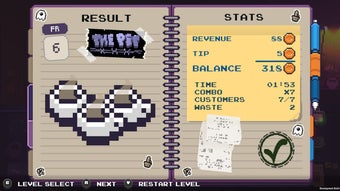
Pixel Cafe, developed by Baltoro Games, drops you into Karstok as Pixel to juggle service-floor pressure and personal memory work. The title pairs arcade-style coffee and food service segments with visual-novel scenes that reveal a three-generation family narrative. Players advance by upgrading equipment, learning recipes, and decorating a shared home that alters morale. Fans of cozy simulations, time-management players, and visual-novel readers seeking emotional pacing are the primary audience.
What kind of experience does the game present?
The setting puts the player inside a crowded city and a small protagonist's life, so choices carry emotional consequence. The core loop alternates timed service shifts with interstitial narrative episodes that probe family, memory, and identity across generations. Thus, mechanical success in a shift unlocks story beats and resources, and narrative decisions redirect character relationships, making each play session both task-focused and story-driven.
How does a typical shift play out?
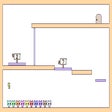
Shifts are fast and task-dense, requiring quick order handling and ingredient sequencing. Gameplay elements include:
- arcade-style order queues and timed preparation,
- equipment upgrades and recipe mastery that change service speed,
- ten distinct venues with different customer mixes and constraints,
- touchscreen support on Nintendo Switch alongside button controls.
Players should expect a learning curve for controller button mapping and a rise in difficulty at later locations.
What does the game look and sound like?
Visuals use detailed pixel environments and character portraits that emphasize small, domestic gestures. The soundtrack mixes lo-fi and jazzy textures to underline mood rather than drive tempo. On Switch the download requires roughly 513 MB of storage, and the interface adapts to touch or controller input. Menu layouts and portrait frames keep story moments readable between hectic service sections.
How lasting is the play loop and how does it compare?
Progression rewards mechanical mastery and home personalization that yields gameplay benefits, which encourages repeat runs to optimize recipes and equipment. The narrative thread spanning three generations provides a longer-form reason to return beyond pure score chasing. Players familiar with Diner Dash or Cook, Serve, Delicious! will recognize the shift-based demands but find a stronger focus on character and story here. Steam shows a very positive reception and critics give it a solid average.
The game suits players who like pressure mixed with quiet story beats
The game is a solid choice for players who enjoy alternating short, intense service rounds with slow, character-driven interludes; its design rewards pattern memory and emotional pacing. One consideration is that controller mapping and later-level challenge require patience. For anyone who prefers narrative weight alongside demanding shift play, the title offers a clear, playable rhythm that emphasizes consequence over pure arcade scoring.